
Insights ·January 14, 2026
Healthcare Construction Documentation: Photographing a 24-Month Hospital Build
How long-form healthcare construction documentation works: 24-month aerial + ground-level + as-built records for hospitals, behavioral health, and medical office buildings in Charleston and across South Carolina.
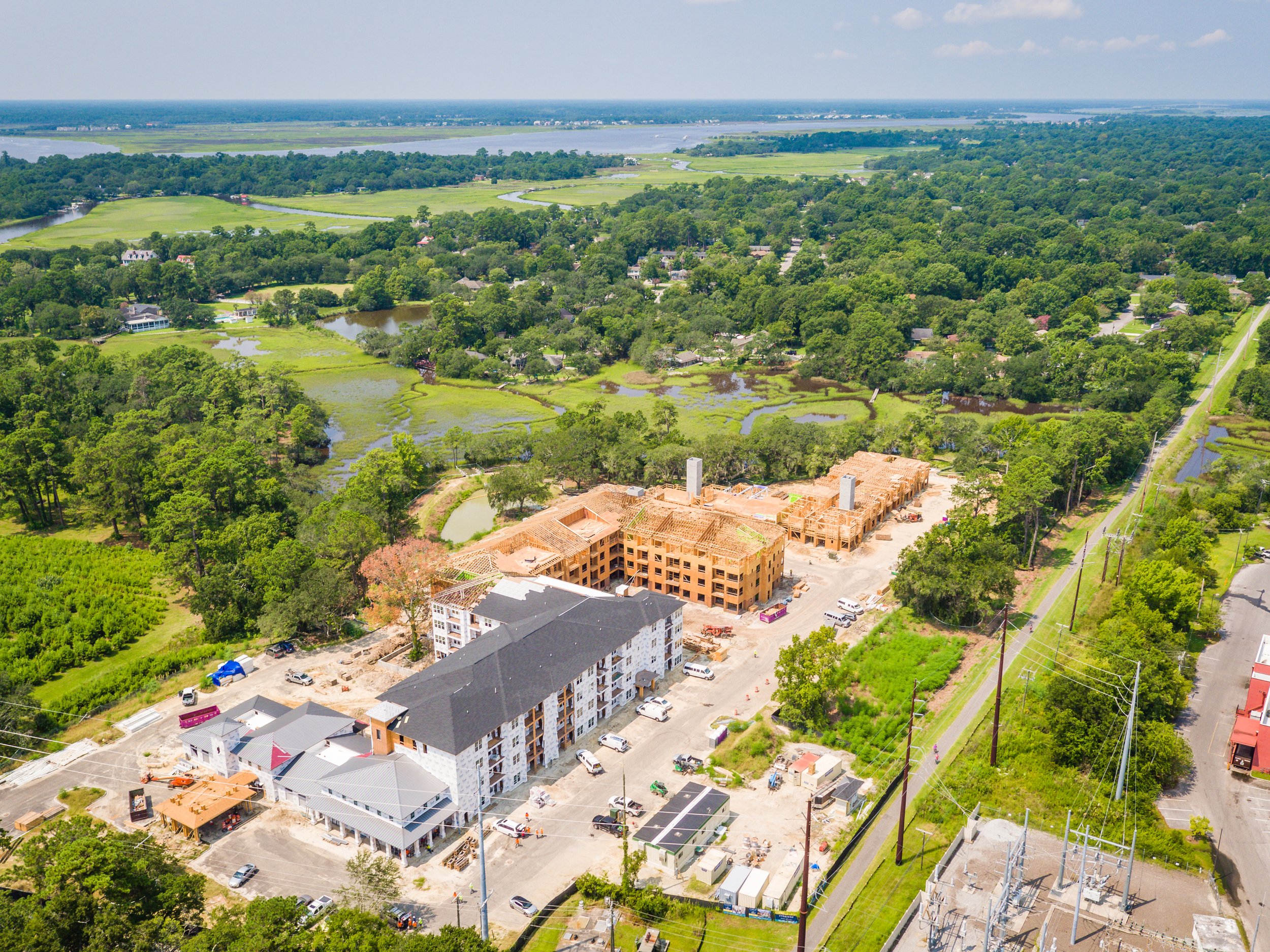
Photographing a hospital takes longer than photographing a hospital takes to build. The first time you walk a steel-frame healthcare campus on month three, the way it looks bears almost no resemblance to what the finished building will be — and the way it looks on month eighteen, when patient flow patterns are being walked through with rubber-banded swatches taped to the walls, bears almost no resemblance to month three. By substantial completion, you have a building. By go-live, you have a healthcare facility. Photography that documents the difference is what gives owners, GCs, and architects something to show when the next opportunity comes up.
This is what 24 months of healthcare construction documentation actually looks like, and why every long-lead facility build in South Carolina should have it.
Why healthcare is different from other commercial construction documentation
A market-rate apartment community might take ten or twelve months from groundbreaking to TCO. A medical office building might take fourteen. A behavioral health campus or full-service hospital can take twenty to thirty months, and every one of those months adds a layer of complexity that doesn’t exist on other commercial projects.
Infection control protocols govern when and where a photographer can move once interior fit-out begins. MEP systems for clinical spaces have a complexity ceiling that exceeds typical commercial — medical gas, isolation rooms, lead-shielded radiology, dedicated HVAC for procedure suites — and most of those systems get covered up before anyone outside the construction team will see them again. Photographing them at the right moment is the difference between a usable as-built archive and a series of finished-space photographs that don’t answer the question the litigation attorney is going to ask three years later.
For architecture firms specializing in healthcare — Array Architects, McMillan Pazdan Smith’s healthcare studio, the in-house design groups at MUSC and Roper St. Francis — there’s a related but distinct value: the completed-facility photography you’ll submit to AIA Healthcare Design Awards or Healthcare Design magazine needs to live in the same visual world as the field-condition documentation that proved you executed the design as drawn. Hiring two different photographers for those two roles guarantees that they won’t.
What 24 months of documentation produces
On a hospital build, periodic site visits typically cluster on two cadences. Monthly aerial drone documentation gives owners and developers the bird’s-eye view they need for lender reporting, board presentations, and marketing — the same image, taken from the same compass bearing every visit, telling the same story month over month. Site-level interior and exterior progress photography happens on a different schedule — usually keyed to milestones (slab on grade, dry-in, drywall complete, finishes, substantial completion) plus whatever the owner’s rep flags as worth capturing.
The deliverables compound. By month six you have the foundations of an as-built archive. By month twelve you have a turnover story for the design firm. By substantial completion you have campaign-grade marketing assets — and by go-live, a portfolio piece every party involved can use in pursuit of the next project.
The Gateway Charleston case study
We’ve been documenting Gateway Charleston since January 31, 2025 — bi-weekly aerial site visits with consistent compass orientation, parallel ground-level milestone photography, and a stitched timelapse that walks viewers through the entire construction sequence in under twenty seconds. The build isn’t healthcare, but the documentation model is identical, and the timelapse demonstrates what consistent angle discipline produces when applied across a long construction timeline.
The same model applied to a 24-month behavioral health, surgical suite, or full-service hospital build gives the project team a deliverable inventory that’s difficult to assemble in any other way: month-by-month aerial sequences, milestone interior records, MEP-system pre-cover-up documentation, and a finished-facility shoot whose visual language matches the construction record that preceded it.
What we deliver during a hospital build
Specifically:
Aerial / drone site documentation — Part 107 certified, repeated from the same compass bearings each visit so the assembled sequence reads as a single continuous record. Used for lender reporting, owner board presentations, marketing assets, and ENR-style trade press submissions.
Ground-level milestone photography — structural progress, MEP rough-in, fit-out, finishes, substantial completion. Coordinated through OAC meetings so the visits land on the right side of the cover-up schedule for systems that won’t be visible later.
As-built documentation — pre-cover-up imagery of the systems and assemblies that get hidden behind drywall, ceiling tiles, and access panels. The single most valuable deliverable for owners managing facility lifecycle, and the single most valuable deliverable for risk managers if anything goes to dispute.
Completion and portfolio photography — final-state architectural photography that matches the visual language of the construction record. Used for AIA award submissions, design press, GC and developer portfolios, and the architecture firm’s next pursuit.
Who this serves
Healthcare developers planning a 24-month MOB build, GCs working with healthcare systems on facility expansions, architecture firms with healthcare practices preparing AIA Healthcare Design Awards entries, and risk managers responsible for facility-lifecycle documentation. We’ve worked with McMillan Pazdan Smith, BL Harbert International, MB Kahn Construction, Array Architects, MUSC Health, and Roper St. Francis on healthcare and adjacent commercial work across South Carolina and the Southeast.
Getting started
If you’re scoping a healthcare construction project that’ll run twelve months or longer, the right time to plan the documentation cadence is before groundbreaking. Visit-frequency choices, drone-flight discipline, and pre-cover-up access coordination all get easier when they’re baked into the schedule from day one rather than retrofitted into a build that’s already underway. Reach out to discuss scope and cadence directly — healthcare project work is quoted on a per-engagement basis, with documentation packages calibrated to the specific build duration and the deliverables the project team needs.
Continue Reading