
Insights ·December 4, 2025
A General Contractor's Photo Documentation Playbook: Pre-Construction to Substantial Completion
The four-phase model for construction photo documentation general contractors actually use — pre-construction conditions, monthly progress, substantial completion, and post-occupancy. With the AEC trade vocabulary every project executive should know.
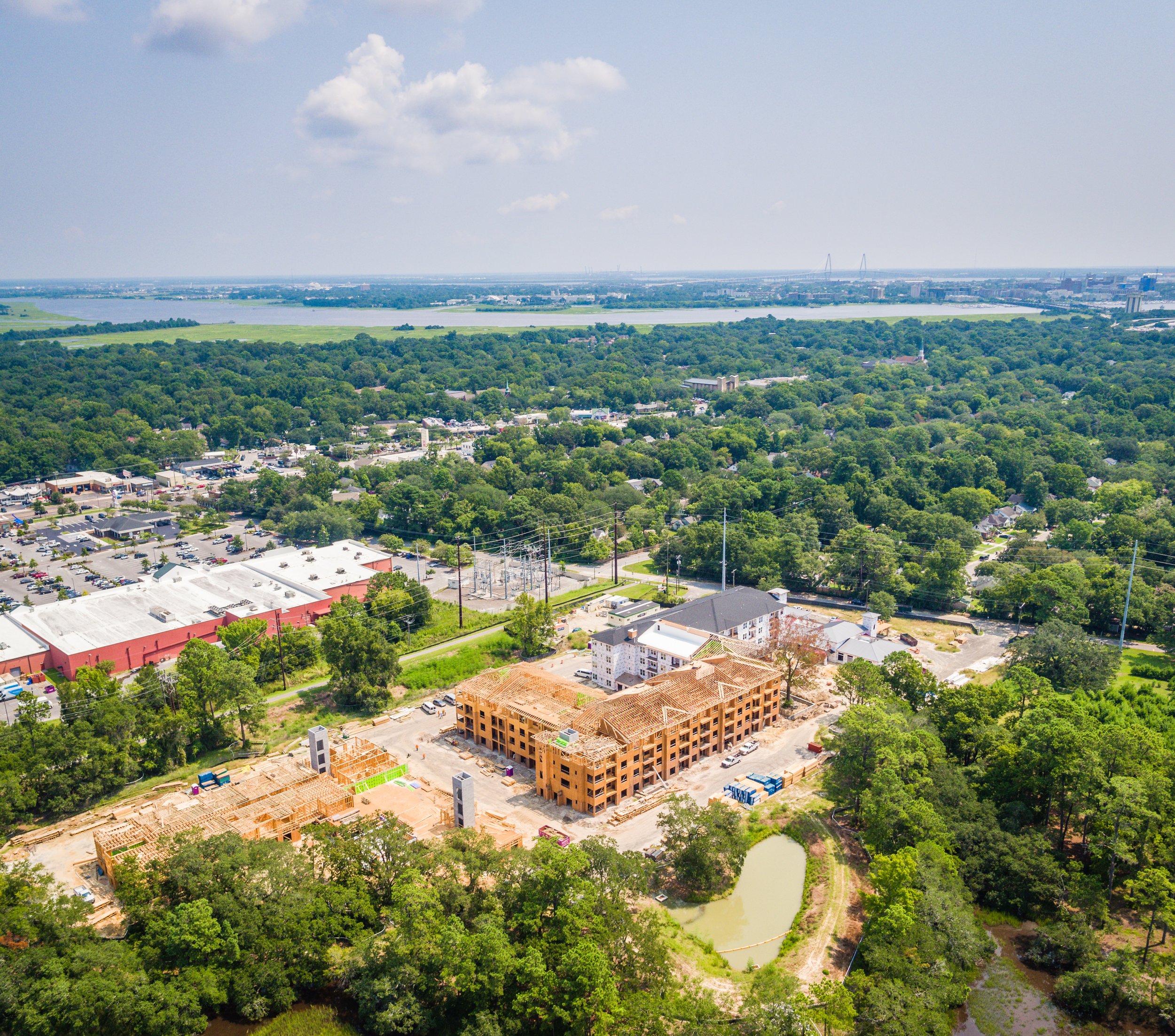
Most construction documentation contracts boil down to a recurring site visit on a fixed cadence, a thumb drive at the end of the month, and a year-end deliverable that lives on someone’s laptop. That’s fine for compliance. It’s not what the work is for.
The general contractors getting real value out of construction photography treat it as four distinct deliverables, each with a different audience and a different shelf life. Here’s how the four phases map across a typical commercial build, what each phase produces, and the AEC vocabulary that should be in every conversation between a project executive and a photographer who’s actually working at the AEC tier.
Phase 1: Pre-construction conditions
Before mobilization, the site has a story that won’t exist again. Adjacent structures, existing utilities, pavement conditions, drainage features, trees and landscape elements that will be removed or impacted — photographic record of the "day zero" condition is the cheapest insurance product on the project. If a neighbor’s claim shows up six months in, the file you cared enough to make in week zero is the file your attorney wishes you had made.
Pre-construction conditions photography is fast, low-cost, and the project manager who skips it is the one who learns the hard way that "we should have documented that" isn’t a defense. Aerial and ground-level coverage. Date-stamped EXIF. Delivered to project records before the first piece of equipment hits the site.
Phase 2: Monthly construction progress
Once the project is moving, monthly progress photography becomes the load-bearing deliverable. The audience is plural: owner’s reps for draw documentation, lender reporting, board presentations, marketing teams, and (eventually) the GC’s own portfolio. One visit serves all of them only if it’s actually planned around the schedule, not improvised after the fact.
What "planned around the schedule" means in practice: aerial flights repeated from the same compass bearings each visit, so the assembled sequence reads as a continuous record month over month; coordinated through the OAC meeting agenda so the photographer’s schedule aligns with when each system is rough-in vs. cover-up; pre-cover-up imagery of MEP, in-wall framing, and structural connections captured before drywall closes. Visits stitch into a deliverable that supports billing cycles, lender reporting, and the GC’s eventual portfolio piece. The single biggest mistake we see contractors make is treating monthly photography as a documentation chore separate from the project schedule, when the value is created precisely by aligning the two.
Phase 3: Milestone capture — substantial completion through turnover
By the time the punch list is being walked, the photography conversation pivots. Marketing photography of completed but not-yet-occupied space is the most valuable single-day shoot on the project, and the GC marketing director who plans it well gets portfolio assets they’ll use for the next five pursuits.
What makes a turnover shoot work: scheduling it after final cleaning but before the owner brings in furniture, signage, and operations staff; coordinating with the architect on the angles that best read the design intent; light-balancing to interior conditions that match how the building will actually look in operation; and producing both a tight portfolio set and a broader documentation set that captures every space the marketing team might want to feature.
Phase 4: Project completion and post-occupancy
The final phase, often missed, is photography of the building in actual use. A hospital with patients. A multifamily community with residents and amenities active. An office building with tenants moved in. This is the photography that gets used by the developer and the architect, not the GC — but for GCs pursuing repeat work with the same owners and design firms, a completion shoot you facilitated is the gift that keeps generating referrals.
Post-occupancy timing is delicate. Too soon and the space hasn’t developed the small signs of life that distinguish "new building" from "working building." Too late and operational wear has set in. Six to nine months after occupancy is the typical window for the most useful images.
The AEC vocabulary that should be in every conversation
The trade language that signals you’re working with a photographer who actually understands construction documentation rather than a real estate photographer with a drone. None of these phrases individually generates search traffic, but their collective presence in any vendor conversation is what tells a project executive they’re hiring at the right tier:
Part 107 — the FAA commercial drone certification. Anyone flying for a paying GC needs current Part 107 and the documentation to prove it.
As-built / as-built conditions — documentation of installed work, particularly for systems that get covered before final inspection. Hospital MEP, in-wall framing, mechanical chase routing.
OAC meeting — owner-architect-contractor. The weekly or bi-weekly forum where photography schedules should be confirmed alongside everything else on the project.
MEP — mechanical, electrical, plumbing. The systems whose pre-cover-up documentation has the highest information value per photograph.
Substantial completion — the contractual milestone that triggers turnover photography opportunity. Photography window: between substantial completion and beneficial occupancy.
Punch list — the closeout deliverable. Photography during punch list is useful for closeout documentation but is not the right window for portfolio work.
Owner’s rep — the developer-side project manager. Often the actual point of contact for photography scope, even when the GC is the contracting party.
Draw documentation — the imagery a lender wants to see before releasing the next financing draw. Aerial helps; ground-level milestone imagery helps more.
ENR Top 500 / ENR Southeast — the contractor ranking publications. Project features there generate backlinks and credibility; photography quality is the gate.
What this looks like in Charleston
We work with general contractors and developers across South Carolina — Choate Construction, BL Harbert International, MB Kahn Construction, and McMillan Pazdan Smith among them — on the four-phase model described above. The Gateway Charleston build (bi-weekly aerial documentation, January 2025 through ongoing, stitched into a timelapse video that demonstrates the consistency of the documentation method) is the public case study. The same model applied to your build delivers the same set of phase-keyed deliverables, calibrated to your schedule.
If you’re planning the documentation scope for a project that’ll run twelve months or longer, the right conversation is before groundbreaking. Reach out to discuss the four-phase model against your specific build — project work is quoted on a per-engagement basis based on duration, site complexity, and the deliverables your project team needs.
Continue Reading